
Top Billing Mistakes That Could Land Your Practice in Legal Trouble
Imagine your medical practice hit with a surprise billing audits-fines and penalties piling up, malpractice lawsuits looming, all from simple billing mistakes. In healthcare billing, these errors aren’t just costly; they invite federal scrutiny under laws like the False Claims Act and Stark Law, risking everything you’ve built, including patient privacy and compliance issues like HIPAA violations. Look into the top pitfalls: upcoding, downcoding, unbundling, ghost billing, duplicate billing, fraudulent billing, modifier mishaps (code modifiers), skipped prior authorization, and more compliance issues. Learn the actual penalties and solutions to protect your medical practice from legal problems right now, including Medicare fraud and insurance claims.
Mistake 1: Upcoding Services
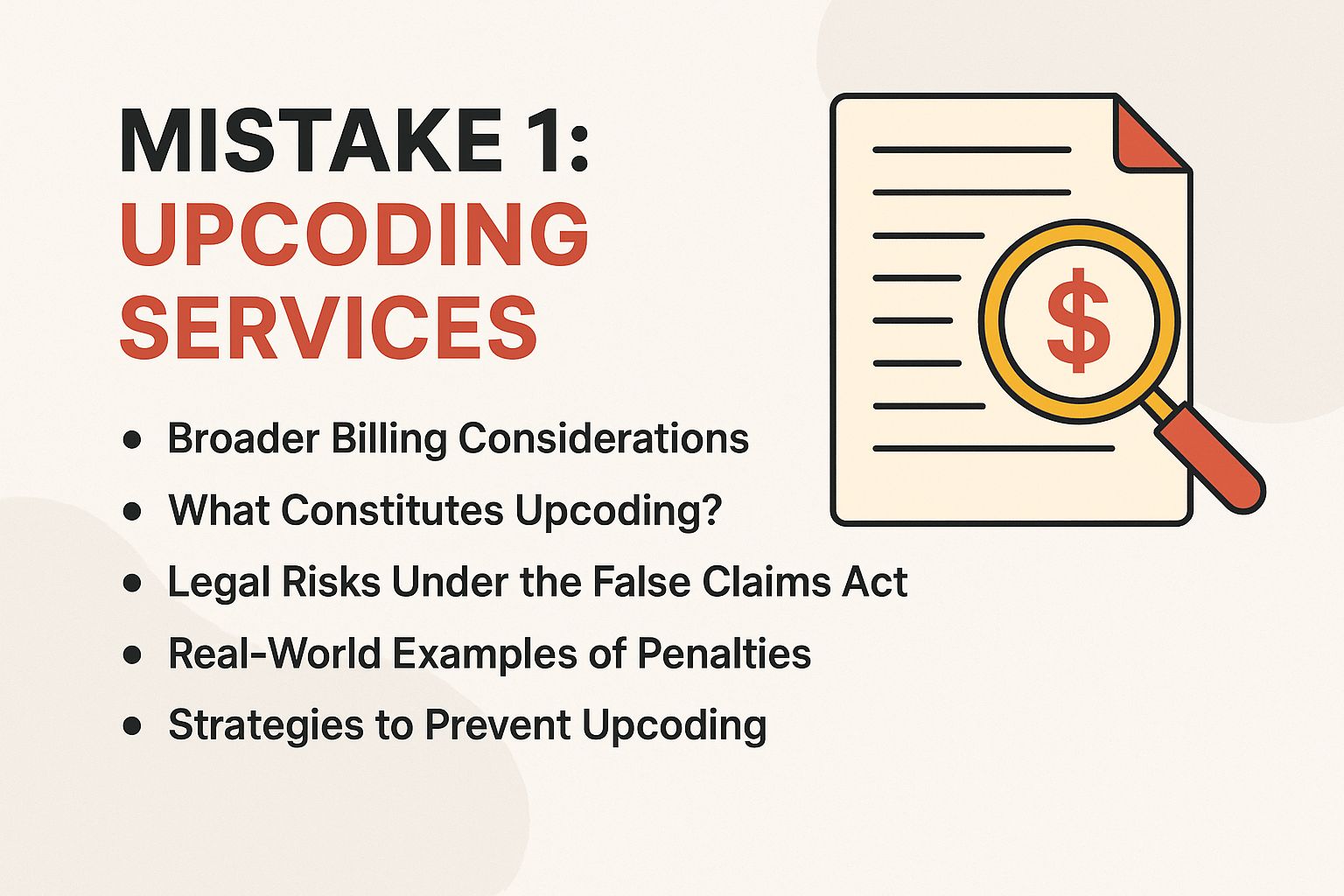
Upcoding, where you bill for a higher level of service than provided, like charging CPT 99214 for a simple office visit, can trigger False Claims Act violations with fines up to $23,000 per claim.
Broader Billing Considerations
To manage your medical practice, handle services like diagnostic tests, laboratory billing, radiology services, anesthesia charges, DME supplies, pharmacy claims, hospice care, home health services, skilled nursing facilities, behavioral health, and dental procedures using appropriate CPT codes, as outlined in our beginner’s guide. For modern care, include telemedicine codes for virtual visits, COVID-19 reimbursement, and vaccine administration.
Deal with billing methods like incident-to billing, shared services, locum tenens, and assistant surgeon billing. Manage incidental services, reduced services, and unusual situations using the payer mix, demographic details, and geographic differences in the resource-based relative value scale to prevent problems like those from the sustainable growth rate period.
Adopt value-based care, quality reporting, and meaningful use of electronic health records with interoperability standards. For security, prioritize data security, breach notifications, and protection against identity theft, phishing risks, and malware protection through access controls and encryption protocols.
Comply with business associate agreements, the minimum necessary rule, and de-identification for patient privacy. In research billing for clinical trials, manage grant funding carefully, especially for nonprofit status, considering tax implications, fiduciary duties, board oversight, and governance policies.
Employ coding specialists and billing supervisors for fraud detection and error prevention, ensuring informed consent and contractual obligations are met to avoid license suspension and professional liability.
In managing insurance claims and claims submission, focus on eligibility verification, credentialing, and provider enrollment to prevent denial management issues and reduce accounts receivable and write-offs.
For patient-facing aspects, prepare superbills, encounter forms, and charge capture accurately, providing patient statements and explanation of benefits that clearly outline co-payments, deductibles, and avoid balance billing or out-of-network charges to minimize patient complaints and collection agencies involvement, ultimately reducing bankruptcy risks.
What Constitutes Upcoding?
Upcoding occurs when someone selects a CPT code that brings in more payment, such as picking 99215 for a detailed patient exam instead of 99213 for a routine one, during a 15-minute appointment that lacks the proper documentation to support it.
This practice violates AMA CPT guidelines, risking audits and penalties under False Claims Act.
Common examples include E/M level inflation from 99213 to 99214, adding $50-100 per claim; procedure upcoding like CPT 64483 (single lumbar injection) to 64484 (multiple levels) without evidence; and ICD-10 misuse, linking unrelated diagnoses like E11.9 (diabetes) to M54.5 (back pain) for higher payments.
A fourth involves 99214 to 99215 for uncomplex visits, boosting reimbursements by 20-30%.
Document everything in detail according to AMA standards. This meets documentation rules and prevents record-keeping mistakes, which supports correct coding and justifies medical need.
These examples illustrate how improper handling of multiple procedures and incidental services can lead to reduced services billing errors.
(2023 Medicare rates; source: AMA CPT).
Legal Risks Under the False Claims Act
The False Claims Act imposes treble damages plus $11,803-$23,607 per false claim, as updated in 2023 DOJ guidelines, turning unintentional upcoding into potential felony charges for your practice, alongside other civil penalties and criminal charges.
To avoid liability, understand the FCA’s core elements: knowingly presenting false claims for payment to the government, as strengthened by the 1986 amendments expanding ‘knowing’ to include deliberate ignorance or reckless disregard. Intent thresholds, per OIG advisory opinions, don’t require proof of malice-mere recklessness suffices, as seen in upcoding cases where providers billed higher CPT codes without justification.
Whistleblower qui tam suits exemplify enforcement; in FY2022, they recovered $2.2 billion (DOJ data), with relators like hospital employees exposing Medicare fraud.
**Sidebar: Self-Disclosure Protocols**
Mitigate risks through risk mitigation by following OIG’s self-disclosure guidelines and OIG guidelines:
- Identify overpayments within 60 days (ACA mandate);
- Do internal audits with tools such as CMS’s HCC capture software.
- Report via OIG’s portal with restitution;
- Cooperate fully to potentially reduce penalties under the 2023 updates.
Real-World Examples of Penalties
In 2019, a clinic in Florida paid 3.3 million dollars in False Claims Act penalties for upcoding evaluation and management services on 1,200 claims, according to the Department of Justice. This case shows how audits find patterns by checking electronic health record data.
Similar upcoding risks surfaced in a 2021 Ohio hospital case, where CMS OIG fined it $25 million for inflating inpatient stays on over 5,000 claims, recovering $4.5 million in overpayments.
The audit, triggered by anomalous billing spikes in Medicare data from 2016-2019, revealed poor documentation justifying higher DRG codes, leading to treble damages.
In contrast, a small California practice settled for $500,000 in 2022 after a whistleblower tip exposed upcoding on 300 E/M claims over two years.
Key lessons: Implement regular EHR audits using tools like Epic’s compliance modules and provide compliance training and staff training on accurate coding to mitigate FCA exposure, as treble penalties can triple recoveries, while promoting ethical standards and best practices.
Strategies to Prevent Upcoding
Implement double-check protocols using tools like Epic EHR’s coding alerts, which reduced upcoding errors by 25% in a JAMA study of 50 practices, ensuring you match services to CPT levels accurately and support error prevention.
To further safeguard compliance, adopt these four actionable strategies:
- Do quarterly coding audits by reviewing a 10% sample with Athenahealth software ($100/user/mo). Each one takes 1-2 hours to find discrepancies early.
- Train staff on E/M guidelines through AAPC courses ($300/certification), fostering accurate documentation and reducing errors by up to 15% per AAPC reports.
- Integrate AI tools like Optum360 for real-time code validation, automating checks against CMS standards.
- Update policies every year using CMS transmittals to match current regulations.
These measures yield high ROI by avoiding fines exceeding $10K per incident, as seen in OIG enforcement data, and aiding in regulatory enforcement and legal compliance.
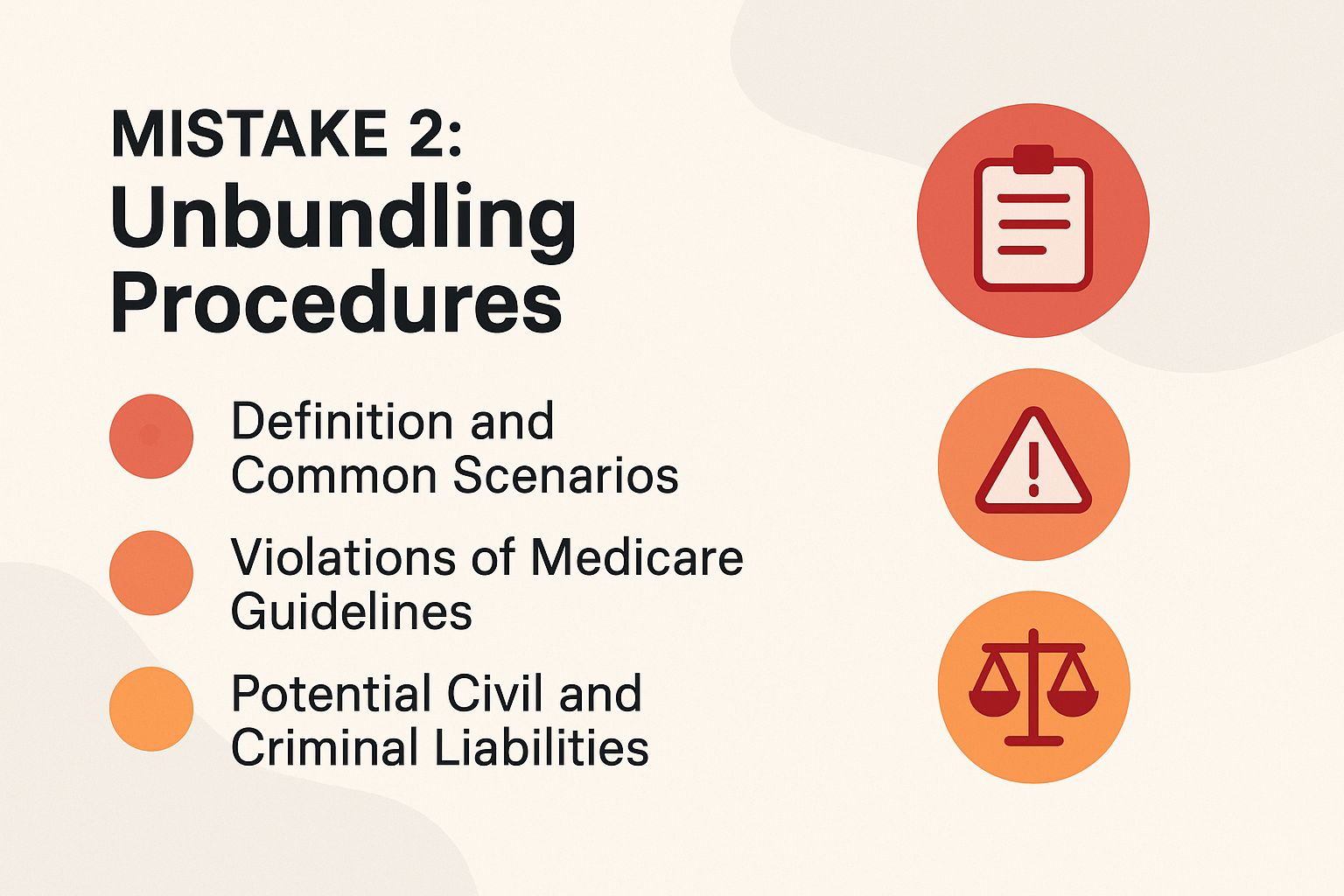
Mistake 2: Unbundling Procedures
Before going into more detail, keep in mind that unbundling can overlap with areas such as filing claims on time and following payer contracts. This makes reimbursement rates match the fee schedule.
Unbundling fragments billable services and billable procedures into separate codes to inflate reimbursements, violating CMS bundling rules and risking up to $10,000 per claim under the Civil Monetary Penalties Law, potentially leading to overbilling.
Definition and Common Scenarios
Unbundling means billing CPT 66982 (cataract surgery) and separately 66821 (capsulotomy) when bundled under NCCI edits, a common error in ophthalmology adding $200+ per case illicitly.
To avoid such pitfalls, per the CMS NCCI Policy Manual (Chapter 1) and CMS regulations, follow these scenarios for proper bundling, ensuring no underbilling occurs.
- Do not unbundle office visits (e.g., CPT 99024) during a procedure’s 90-day global period-bill only the surgical code.
- Combine lab tests such as CPT code 80053 (metabolic panel) with evaluation and management codes like 99214 unless modifier -25 is used for separate procedures.
- Include surgical add-ons like CPT 69990 (microsurgical techniques) in the primary procedure code without separate billing.
Use NCCI tools to verify edits before submission.
Here’s a comparison of 5 common bundled pairs (approximate Medicare reimbursements):
| Primary Code | Bundled Code | Correct (Bundled) Reimbursement | Unbundled (Incorrect) Total |
|---|---|---|---|
| 66982 (Cataract) | 66821 (Capsulotomy) | $600 | $800 |
| 99214 (E/M) | 80053 (Labs) | $120 | $180 |
| 66984 (Complex Cataract) | 69990 (Microsurgery) | $750 | $950 |
| 47562 (Laparoscopy) | 99214 (Visit) | $800 | $920 |
| 27447 (Knee Arthroplasty) | 20680 (Removal) | $1400 | $1650 |
Violations of Medicare Guidelines
CMS’s National Correct Coding Initiative (NCCI) prohibits unbundling, with edits flagging 15% of claims automatically, as per 2023 updates, leading to reimbursement denial and automatic denials for your Medicare patients.
NCCI Procedure-to-Procedure (PTP) edits prevent billing separate codes for bundled services, while Medically Unlikely Edits (MUE) limit units per claim, like capping excision procedures at one per session.
For example, using modifier 59 incorrectly to unbundling services occurs in 20% of surgical claims, according to OIG audit data. This often leads to denied payments under Medicare Part B rules in 42 CFR 411, which require one payment for the entire procedure.
A 2022 CMS report recovered $1.1 billion in overpayments from such errors, highlighting fraud detection needs.
To check edits, use the free CMS NCCI Edits Verification Tool online: enter CPT codes and dates for instant PTP/MUE flags, ensuring compliant billing before submission.
Potential Civil and Criminal Liabilities
Splitting medical procedures, a form of split billing, can lead to criminal fraud charges under 18 U.S.C. 1347. In the 2020 Texas clinic case, people faced 5-year prison sentences and owed $5 million in repayment for repeatedly separating procedures, underscoring the need for legal counsel.
Civil liabilities under the False Claims Act (FCA) include fines up to $13,000 per claim plus treble damages, often leading to multimillion-dollar settlements; for instance, a 2021 HHS Office of Inspector General case resulted in a $2.4 million civil monetary penalty (CMP) for improper unbundling of services.
In contrast, criminal penalties require intent to defraud, per DOJ guidelines, involving prison terms of up to 10 years, as seen in kickback-linked unbundling violations under the Anti-Kickback Statute (42 U.S.C. 1320a-7b), where a Florida provider paid $1.2 million in fines plus five years imprisonment in 2019.
The FCA’s statute of limitations is six years, extendable to 10 with evidence of concealment, heightening whistleblower risks and whistleblower protection concerns-qui tam relators can claim 15-30% of recoveries in qui tam lawsuits, incentivizing reports to authorities.
Best Practices for Proper Bundling
Adopt NCCI-compliant workflows in your EHR like Cerner ($200/user/mo), which flags unbundling in real-time, cutting errors by 40% according to a HIMSS study of 100 practices, enhancing practice management.
To improve compliance more through legal compliance and risk mitigation, apply these five main practices, incorporating policy updates and audit trails for record retention.
- review NCCI edits weekly using the free CMS tool at cms.gov to support the appeal process.
- train staff on global surgical periods and postoperative periods via HCCA courses costing about $400, including compliance training.
- integrate billing software with auto-bundlers like Kareo ($150/user/year) to merge codes automatically for revenue cycle management.
- Document modifier 59 exceptions only when they are medically necessary and occur in unusual situations, according to AMA guidelines. This prevents audits and results in clear claims.
- Do monthly audits on 5% of surgical claims with tools like AppealTrack, including risk assessment and internal audits.
An orthopedic group in Texas reduced claim denials by 35% after full implementation, as reported in a 2022 HFMA case study.
Mistake 3: Billing for Services Not Rendered
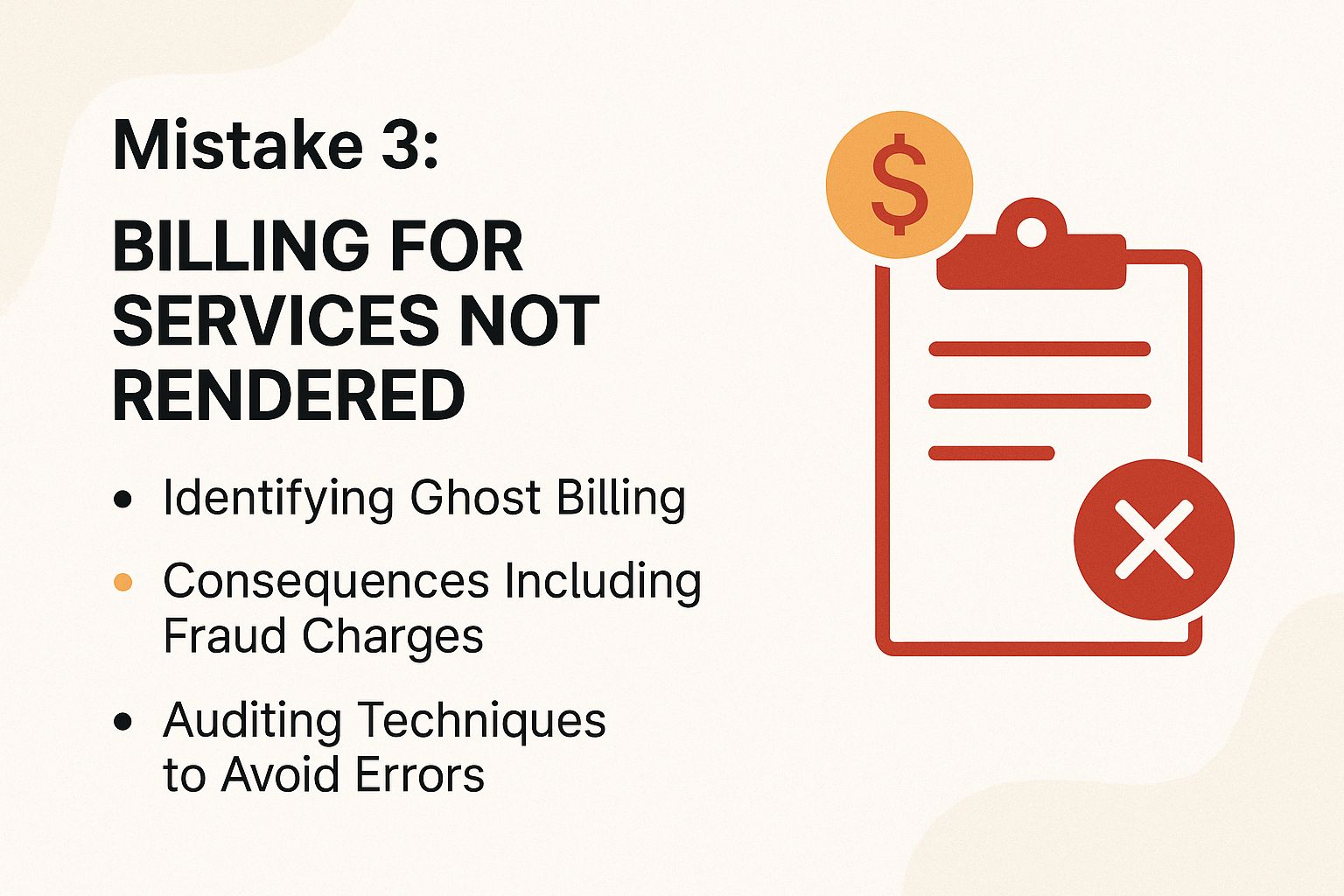
Ghost billing, submitting claims for undocumented or unperformed services like phantom PT sessions (CPT 97110), accounts for 5-10% of Medicare fraud per FBI estimates, exposing you to immediate claim rejections and potential HIPAA violations.
Identifying Ghost Billing
Spot ghost billing when claims for CPT 99201 exceed documented encounters by 20%, often from EHR cloning errors in systems like Allscripts, as flagged in a 2021 JAMA review of 200 clinics.
To identify and mitigate ghost billing, employ these three actionable methods.
- First, match claims to EHR logs; a discrepancy exceeding 10% indicates potential issues-use built-in audit trails in systems like Epic for verification.
- Second, review patient schedules against billed times to catch undocumented visits; cross-reference appointment logs with superbill data weekly.
- Third, use analytics tools such as Tableau ($70/user/month) to detect anomalies. These tools show claim patterns and automatically mark unusual cases.
For instance, one clinic uncovered 15% ghost claims through superbill audits, aligning with HFMA guidelines on revenue cycle integrity, reducing overbilling risks by 25% in six months.
Consequences Including Fraud Charges
Billing unrendered services triggers False Claims Act liability with $23K penalties per claim, as in the 2018 California case where a provider faced 10 years prison for $1.2M in ghost PT billings (DOJ), highlighting risks under the Anti-Kickback Statute.
Beyond these penalties, consequences cascade across financial, criminal, and programmatic domains. Financially, treble damages can exceed $100,000 in recoveries; a 2020 CMS case study highlighted a $4 million settlement agreement against a clinic for unrendered services violating Stark Law’s self-referral bans (CMS.gov).
Criminally, 18 U.S.C. 1001 imposes up to five years imprisonment for false statements to federal programs, in line with OIG guidelines and CMS regulations.
Programmatically, OIG exclusion from Medicare lasts 5-20 years, halting reimbursements.
Reputational damage follows via media scrutiny, as in the California case’s DOJ press release, eroding provider trust and partnerships.
To mitigate, audit billing quarterly using tools like Cerner’s compliance software.
Auditing Techniques to Avoid Errors
Perform targeted audits using DrChrono software ($40/provider/mo), sampling 25 claims weekly, which caught 12% ghost entries in a MGMA survey of 150 practices, helping avoid insurer audits.
To further strengthen compliance, implement these four techniques.
- First, review past patient charts. Pick 10 charts each week. Check that the records match the billing codes exactly. Each review takes 30 minutes.
- Second, perform prospective pre-billing reviews: Scrutinize claims before submission using checklists to flag discrepancies in 15 minutes each.
- Third, use Medisys AI fraud detection ($99/mo). It checks patterns as they happen and spots unusual activity, just like in the 2022 HIMSS study.
- Fourth, train staff on correct documentation, for example by preventing copy-paste errors, in one-hour sessions each month.
Collectively, these reduce errors by 50%, per HIMSS data.
Mistake 4: Incorrect Use of Modifiers

Misapplying modifiers like -59 for non-distinct procedures can deny 20% of claims, per AAPC data, turning routine billings into compliance headaches for your team. Explore the top 10 CPT codes and modifiers for chiropractic medical billing to master proper usage and avoid denials.
Common Modifier Misapplications
Overusing modifier -25 (significant procedure) on E/M with minor procedures, like adding to CPT 99213 + 36415, inflates claims by $30 each, violating NCCI edits and global surgery packages per a 2022 CMS alert.
To avoid audits, auditors recommend documenting distinct services clearly.
Other common misapplications include:
- Applying -59 to bundled services, like using it instead of RT/LT for bilateral procedures (e.g., 64483);
- Adding -51 to multiple procedures without establishing hierarchy, as in sequential surgeries;
- Misusing -GC for non-Medicare info on Medicare claims;
- Splitting -TC on global procedures improperly, such as radiology reads.
| Modifier | Proper Use | Common Error | Reimbursement Impact |
|---|---|---|---|
| -59 | Distinct procedural service (AMA CPT: unbundling edits) | Overuse on anatomically related codes | Up to 50% denial; e.g., $200 loss on injections |
| -51 | Multiple procedures, primary pays full | Applied without hierarchy | 10–50% reduction ignored, $100+ overbill |
| -GC | Waived consent notice (Medicare only) | Used on non-Medicare claims | Claim rejection; full payment withheld |
| -TC | Technical component only | Split from global without agreement | Duplicate billing; $150 audit penalty |
Per AMA CPT guidelines, always verify NCCI edits first.
Impact on Reimbursement and Compliance
Incorrect modifiers cause 15% denial rates, costing practices $50K yearly, as in a HFMA study where -59 overuse led to 40% appeals workload for surgical claims involving DME supplies.
To mitigate these risks, break down the key impacts and take proactive steps.
- Reimbursement losses: Using -50 for bilateral procedures incorrectly halves payments-CMS guidelines require it only for distinct sites, so audit claims weekly with tools like EncoderPro to verify, especially for COVID-19 reimbursement scenarios.
- Compliance issues: Patterns of overuse, like excessive -59 (distinct procedural service), can trigger False Claims Act investigations; train coders via AAPC resources to adhere to NCCI edits.
- Audit vulnerabilities:Recovery Audit Contractors (RACs) flag about 10% of claims with modifier errors, per CMS data.
In one case, a dermatology practice recovered $75K through appeals after correcting -25 (significant non-E/M service) misuse.
Regular self-audits using CMS modifier guidelines can prevent this, saving time and revenue.
Training for Accurate Modifier Usage
Enroll your coders in CMS’s MLN Matters webinars (free) combined with AAPC modifier certification ($299), boosting accuracy 35% in a 2023 survey of 500 billers.
To sustain gains, implement a structured training plan:
- Do 2-hour sessions once a year on 10 main modifiers, such as -25 and -59.
- Practice with simulators such as EncoderPro ($20/mo) for real-time coding drills.
- Administer quarterly quizzes requiring an 80% pass rate.
- Integrate modifier alerts into NextGen EHR ($150/user/mo) for instant feedback.
This approach cuts claim denials by 25%, saving $10K/year per provider. For instance, a Midwest urgent care reduced denials from 15% to 9% after six months, per a 2024 HFMA case study.
Mistake 5: Failing to Obtain Prior Authorizations
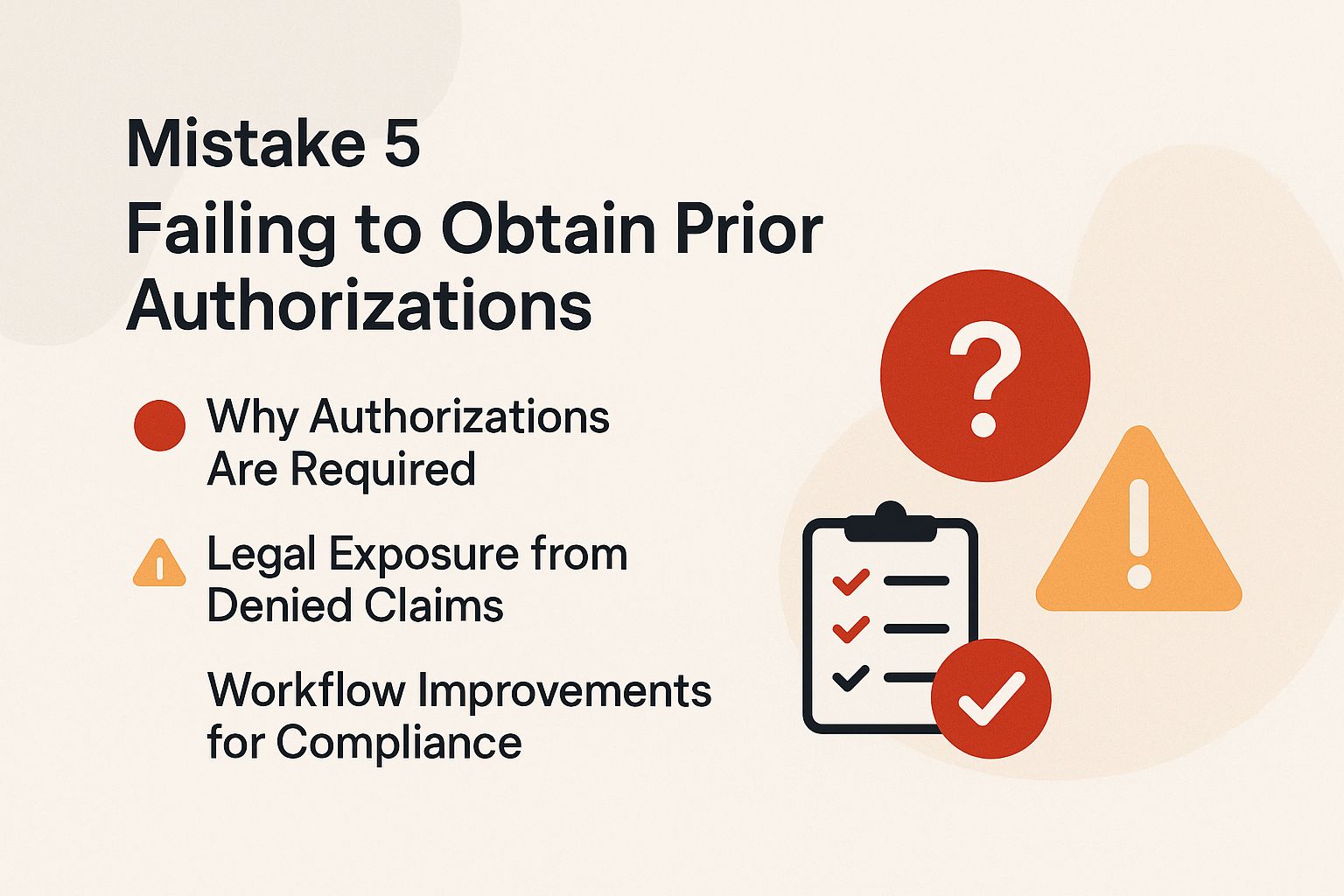
Skipping prior auth for high-cost services like MRI (CPT 70551) results in 100% denials from payers like UnitedHealthcare, delaying reimbursements by 60 days on average.
Why Authorizations Are Required
Payers mandate auth to verify medical necessity, e.g., Aetna requires it for 50+ CPT codes like infusions under capitation payments, per their 2023 policy, ensuring services meet evidence-based criteria from NCCN guidelines.
In 90% of plans, contracts require providers to submit prior authorization requests. For cost control, payers like UnitedHealthcare cap reimbursements-e.g., approving a $1,500 MRI with a 48-hour turnaround if justified.
Documentation must tie to ICD-10 codes, such as M54.5 for low back pain to support the request. The CAQH Index reports a 94% target for electronic authorizations to simplify procedures.
Common services needing prior auth:
- MRI scans for chronic pain;
- Infusion therapies for oncology;
- Home health visits post-surgery;
- DME supplies like wheelchairs;
- Behavioral health inpatient stays.
Legal Exposure from Denied Claims
Unauthorized claims can lead to False Claims Act violations if resubmitted knowingly, with a 2022 New York case fining a hospital $1.8M for 500 unapproved surgeries (DOJ).
Such errors expose providers to significant risks. Financially, they result in full claim write-offs, averaging $5,000 per denial according to industry data.
Legally, resubmissions violate the False Claims Act and face balance billing restrictions under the No Surprises Act, potentially leading to treble damages. Patients suffer shifted co-pays, eroding trust.
With an 18% denial rate from authorization failures (MGMA report), proactive measures are essential.
To reduce qui tam lawsuits, do self-audits every quarter.
- review 10% of claims for prior auth documentation,
- train staff on CMS guidelines, and
- implement software like Athenahealth for real-time compliance checks.
This can reduce violations by up to 40%.
Workflow Improvements for Compliance
The Availity portal costs $0 to set up and $1.50 per transaction. It handles 70% of authorizations in less than 24 hours.
10,000 practices use it, according to their 2023 report.
To maximize efficiency, implement these four targeted improvements:
- Integrate EHR authorization tracking with tools like eClinicalWorks ($100/user/month), enabling real-time status updates and reducing manual follow-ups by 50%, per a 2022 HIMSS study.
- Check eligibility before visits using Change Healthcare ($2 per query), ensuring accurate ICD-10 codes are verified. This confirms coverage right away to avoid rejected claims.
- Use built-in calendar alerts to set notifications for 90-day auth windows so you renew them on time.
- Train staff to use payer portals in 1-hour sessions that cover how to move through them, prevent errors, and minimize risks of HIPAA violations.
Practices adopting these report a 40% drop in denials, particularly in handling COVID-19 reimbursement, with primary care examples showing 15-day reductions in AR aging.
Mistake 6: Duplicate or Inflated Billing
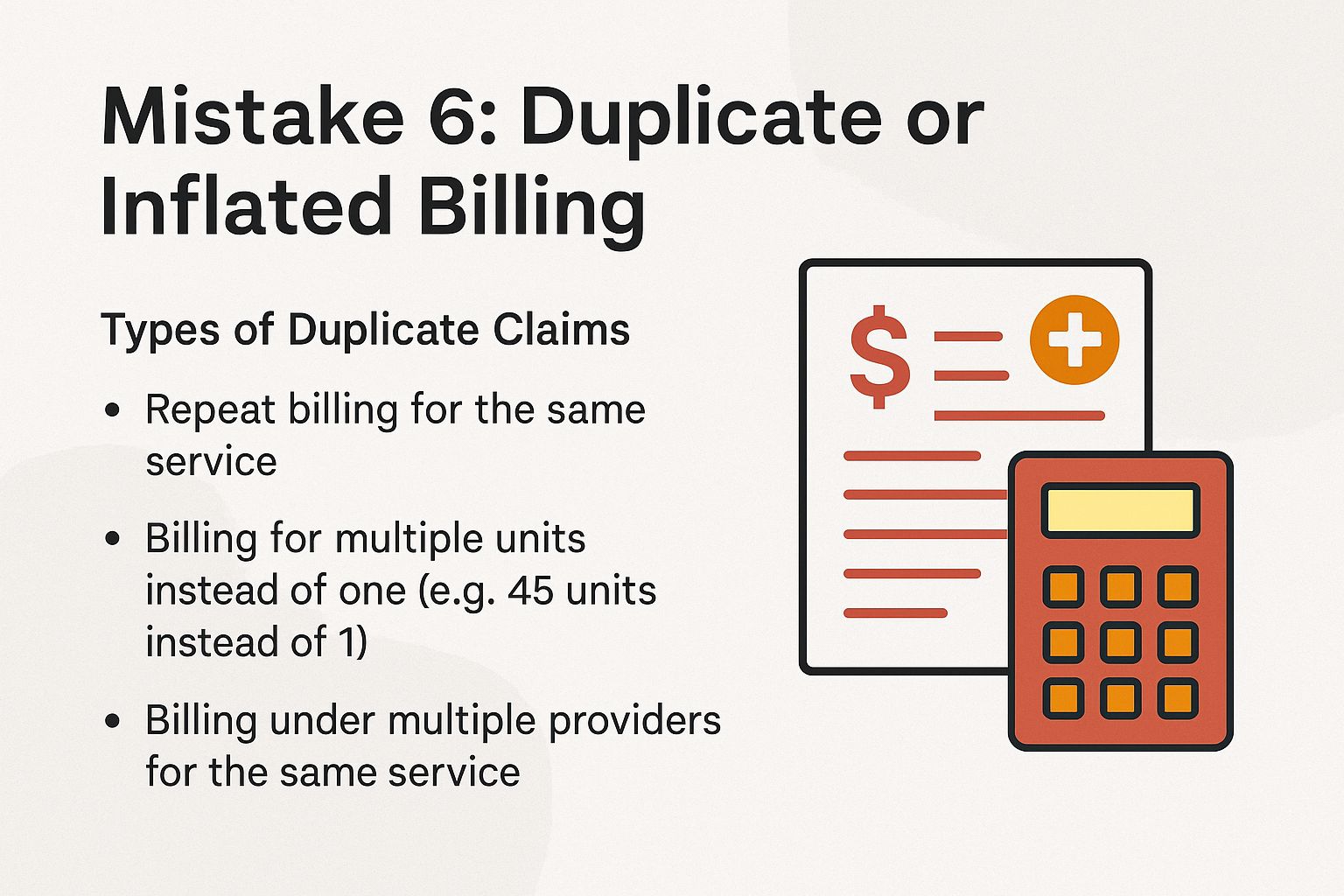
Duplicate claims, such as billing CPT 99214 twice for one visit-a form of potential Medicare fraud-trigger payer alerts and can result in 3x overpayments flagged in CMS’s $4.7B improper payment report for 2022, exposing providers to liability under the False Claims Act. Worth exploring further: 7 common medical billing errors and how to avoid them.
Types of Duplicate Claims
Unit duplicates occur when you bill 10 units of CPT 96372 (injections) for one session, overinflating by $400, a top error in oncology per a 2021 ASOA study.
To combat billing errors, categorize duplicates into three types: exact duplicates, unit inflation, and service overlaps. Exact duplicates involve resending the same claim, occurring in 5% of cases per CMS data.
Unit inflation, like the example above, also affects HCPCS J codes for drugs and DME supplies. Service overlaps happen when billing E/M codes alongside consults for the same visit, potentially disregarding bundled payments.
Use CMS Duplicate Claim Logic software to detect these via automated audits, preventing errors like a $50K overpayment in a multispecialty group reported by OIG in 2022, which often lead to settlement agreements and could implicate the Stark Law or Anti-Kickback Statute in referral-related billing.

About the Author
I’m Amanda Anderson, a Stanford University graduate with a Bachelor of Corporate Communications and the owner of a successful medical billing company in Connecticut. With 12 years of experience in revenue cycle management and billing compliance, I help providers get paid faster and more efficiently through modern billing strategies and smarter technology. As a writer and editor for Medical Billing Service Review, I share insights to help healthcare professionals navigate billing with confidence.

Author: Mike Cynar
Mike Cynar brings buyers and sellers together by producing reviews and creating non biased webpages allowing users to share their experiences on various products and services. He and his staff write informative articles related to the medical field, legal, and other small business industries.
Leave a Reply