
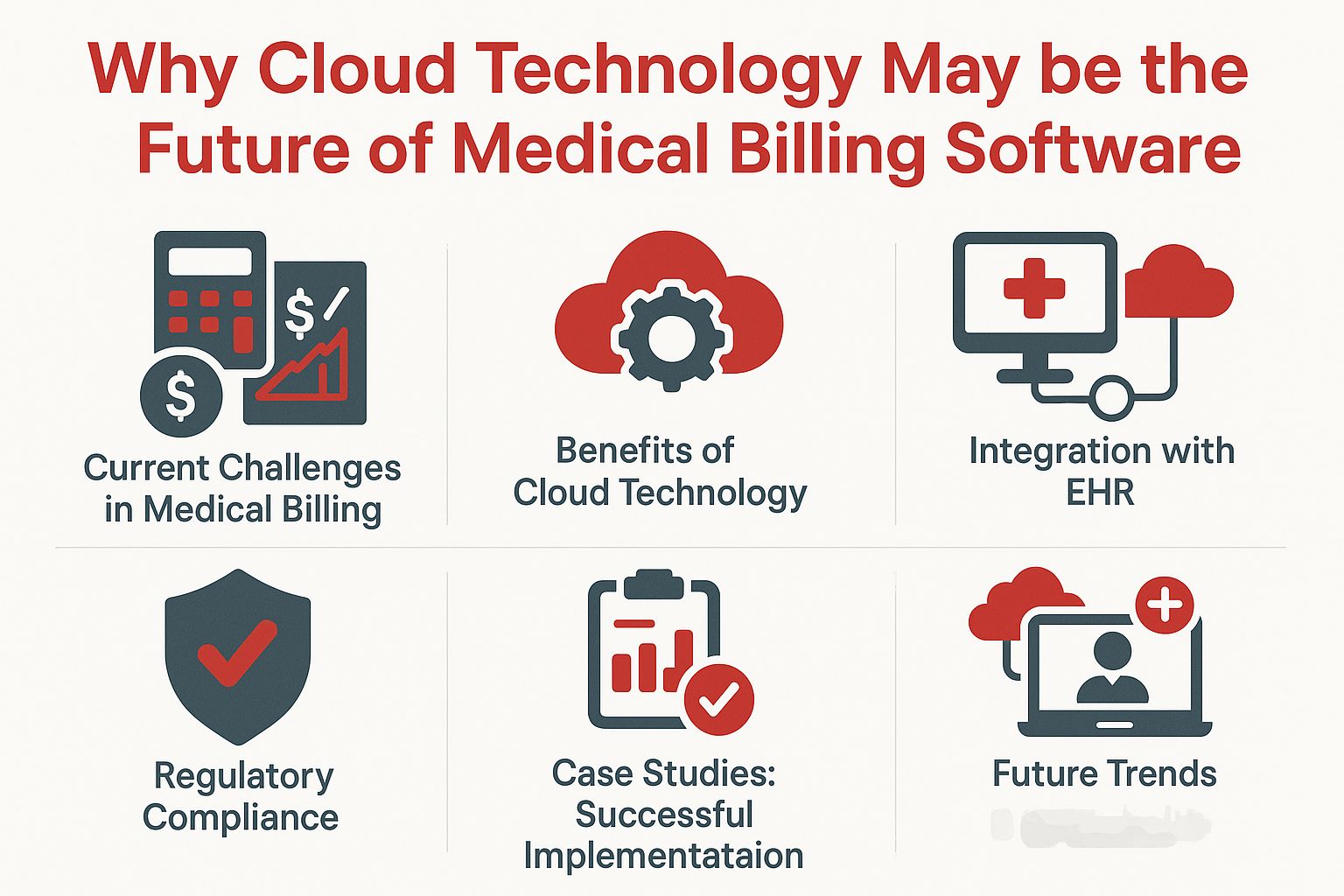
Why Cloud Technology May Be the Future of Medical Billing Software
Think of your medical billing process working smoothly, helping you save both time and money. With the challenges of complex billing systems, high costs, and data security issues looming, the shift to cloud technology could be your solution. In this article, you’ll learn how cloud-based medical billing provides savings, better security, and easy connection with electronic health records. Learn why this new method could change how you handle billing in the coming years.
Definition of Cloud Technology
Cloud computing and cloud technology mean providing computing services through the internet. This allows businesses to use software, storage, and processing power by paying a regular fee.
For healthcare providers, knowing about different cloud systems for sharing data and medical billing software is important.
Infrastructure as a Service (IaaS) enables them to manage virtual servers for data storage, while Platform as a Service (PaaS) allows for application development without dealing with hardware.
Software as a Service (SaaS) offers applications such as electronic health records (EHR), simplifying how patients are managed.
Providers should evaluate their requirements:
- IaaS for adaptable resources
- PaaS for building applications
- SaaS for ready-to-use software and automation
These models support better patient care and workflow optimization for smooth operations.
Overview of Medical Billing Software and patient information systems
Medical billing software takes care of billing tasks for healthcare providers, improving billing accuracy and speeding up the process while reducing errors associated with manual billing.
Important parts of good medical billing software include handling insurance claims for electronic claims submission, managing patient information for effective patient data management, and connecting smoothly with EHR systems, allowing easy access to patient records.
For example, AdvancedMD software is great at tracking claims, while Kareo is strong in managing patient information.
Prioritize options that fit your practice size and specific needs, enabling smoother operations and better accuracy in billing processes.
Current Challenges in Medical Billing and healthcare costs
Even with improvements in technology, providers experience major problems with medical billing that can reduce their efficiency. These issues are further explored in our detailed discussion on the Top 5 Challenges in Medical Billing and How to Overcome Them, offering valuable insights into overcoming these hurdles.

Complexity of Billing Processes and claim processing
The billing process usually has many steps like signing up a patient, checking their insurance, and sending in claims, which makes it difficult for providers.
Simplifying the billing process can greatly improve productivity. One approach is to implement an integrated practice management software like AdvancedMD or Kareo, which consolidates registration and claims submission.
To check insurance, think about using tools like Verifio, which automatically checks and helps minimize mistakes. Giving employees regular training on billing methods and common problems like missing information or insurance errors can improve cash flow.
By concentrating on these specific areas, providers can significantly cut down on delays and improve the management of the revenue cycle.
High Operational Costs
High operational costs in medical billing can arise from staffing, technology upkeep, and billing errors, reducing profit margins significantly.
For instance, staffing often constitutes over 50% of total costs, as trained professionals are essential for accuracy.
Implementing cloud-based billing software, such as AdvancedMD or Kareo, can help manage expenses, with subscription costs typically ranging from $200 to $900 monthly.
Fixing billing mistakes, which often cost $30 per claim, can increase costs if not resolved with staff training or predictive analytics systems that automatically check for errors.
By identifying these operational influences, practices can adopt strategies to mitigate costs effectively.
Data Security Concerns
Data security is a critical concern for healthcare providers, as breaches can lead to compromised patient information and regulatory penalties.
The 2020 ransomware attack on Universal Health Services affected patient records and interrupted services. This shows that strong security measures are urgently needed.
Using multi-factor authentication (MFA) and giving regular training to employees can significantly improve data security. Tools like EHR systems should be updated frequently to address vulnerabilities.
Regular security audits and incident response plans are also essential for disaster recovery, ensuring a quick recovery and minimal impact should a breach occur. These proactive steps help safeguard sensitive patient data and maintain trust.
Benefits of Cloud Technology for Medical Billing
Using cloud technology in medical billing has many benefits, such as reducing costs, allowing for growth, and providing better protection for data. For a deeper understanding of the costs involved, consider breaking down medical billing software costs.
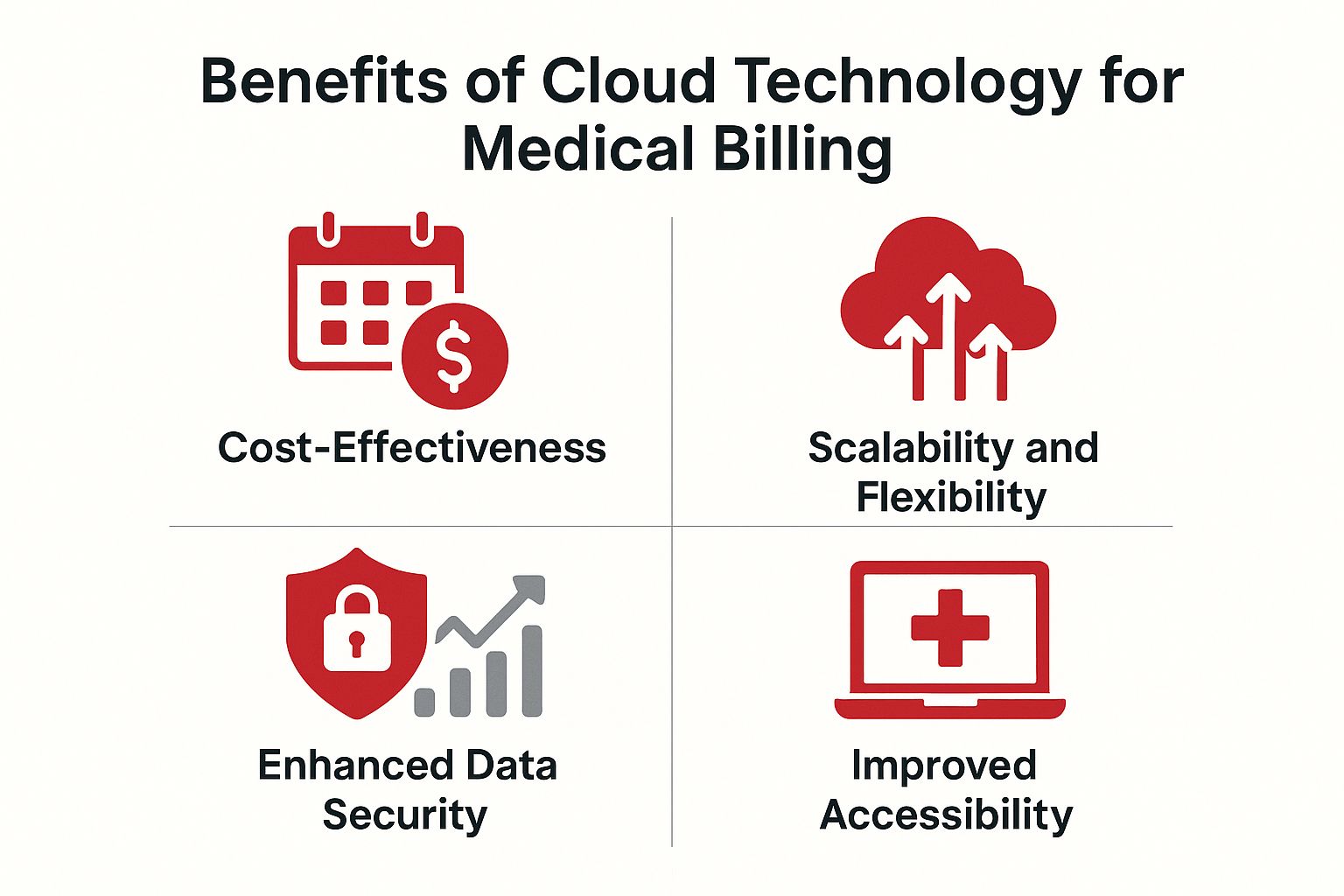
Cost-Effectiveness and cost reduction
Cloud-based billing solutions can significantly reduce costs, often lowering expenses by 30-50% compared to traditional systems.
For instance, a large healthcare provider recently transitioned to a cloud billing system, saving approximately $500,000 annually on IT infrastructure and maintenance.
By eliminating the need for extensive hardware and support teams, they redirected those funds towards patient care initiatives and financial management.
Tools like Zenefits and QuickBooks Online handle invoicing automatically. They improve billing by making it simpler and ensuring accuracy.
These platforms typically offer scalability, allowing healthcare organizations to adjust services as they grow without incurring significant additional costs. This flexibility is important in today’s fast-changing healthcare sector.
Scalability and Flexibility
Cloud solutions provide healthcare providers with scalability and flexibility to scale their billing operations up or down based on demand and growth.
For instance, a hospital system experiencing seasonal patient surges can temporarily increase their cloud resources to manage billing without the need for extensive infrastructure investments.
During off-peak times, they can scale back, reducing costs significantly. Providers like Amazon Web Services (AWS) and Microsoft Azure offer tools such as auto-scaling and pay-as-you-go pricing models, allowing healthcare organizations to only pay for the resources they actually use.
This flexibility improves how operations run and makes patient billing smoother, which leads to better cash flow.
Improved Data Protection and Fraud Detection
Cloud technology improves data security with strong encryption methods, lowering the risk of data breaches and meeting regulatory requirements.
For instance, AES (Advanced Encryption Standard) is widely used to encrypt data both at rest and in transit, ensuring that unauthorized users cannot access sensitive information.
In addition, identity and access management tools, like Okta, can enforce strict user permissions and enable multi-factor authentication, adding another layer of security.
Regular security audits and compliance checks help organizations identify vulnerabilities and maintain adherence to HIPAA or GDPR regulations.
By integrating these technologies, healthcare providers can safeguard patient data effectively.
Improved Accessibility
Cloud technology offers remote access, allowing healthcare providers to access billing data from anywhere, facilitating remote work and collaboration among staff.
This accessibility allows teams to work together smoothly, as they can share updates instantly using tools like Microsoft Teams or Slack.
For instance, a billing specialist can review patient accounts from their home office while consulting with physicians via video calls.
Platforms like Athenahealth allow secure access to billing data through mobile devices, enhancing flexibility.
Healthcare providers can use these tools to simplify processes, cut down on mistakes, and answer patient questions quickly, resulting in better service and more effective staff.
Integration with Electronic Health Records (EHR)
Linking cloud-based billing systems with Electronic Health Records (EHR) and EMR compatibility simplifies processes, allowing improved handling of patient information. For those interested in learning more about the significance of these integrations, our detailed analysis on why EHR integration matters in medical billing software offers valuable insights.
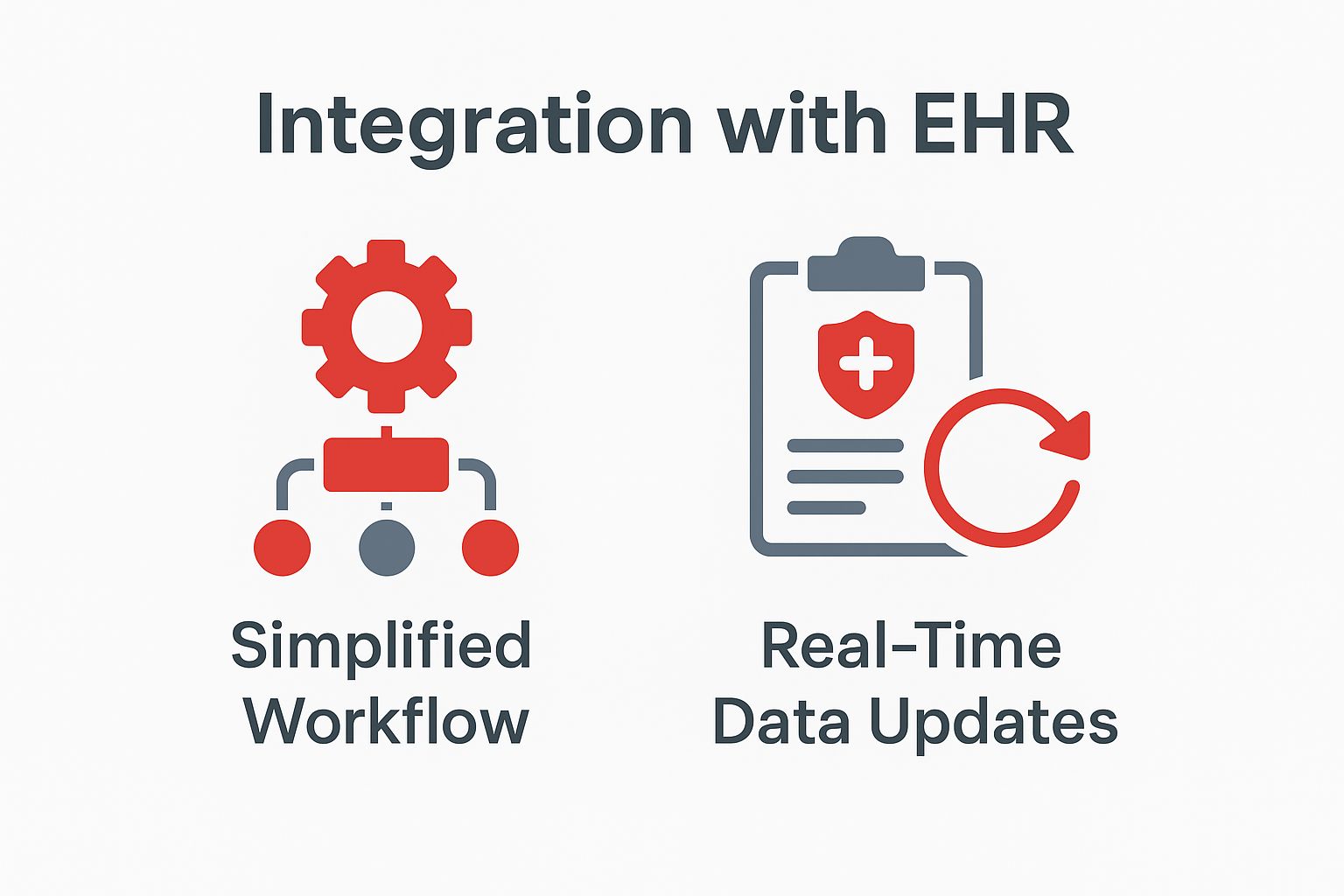
Simplified Workflow and interoperability standards
EHR integration simplifies workflows by reducing manual data entry and ensuring that billing and clinical data are always aligned.
By linking systems like Epic with billing tools such as AdvancedMD, healthcare providers can automatically handle patient charge entries and send insurance claims.
This integration allows for real-time updates; for instance, when a clinician completes a visit in Epic, the billing information can automatically generate a claim in AdvancedMD without additional input.
Tools like MyMedicare and Kareo also offer seamless integration options, reducing errors related to miscommunication and ensuring higher reimbursement rates.
As a result, practices report a significant decrease in administrative hours spent on billing tasks, allowing teams to focus on patient care.
Real-Time Data Updates
Updating data instantly between EHR and billing systems allows healthcare providers to keep patient information correct and speeds up billing through real-time processing.
With real-time updates, staff can quickly find errors and fix patient details before billing.
For example, using combined systems like Epic and Cerner improves coordination, automatically refreshing patient insurance information and visit details. This minimizes the risk of rejected claims due to outdated data.
Tools like eClinicalWorks help with clinical decisions and coding tasks, speeding up the payment process by reducing billing times.
Regulatory Compliance and Cloud Solutions
Cloud solutions help healthcare providers meet and follow HIPAA rules for protecting patient data, enhancing cost efficiency and streamlining healthcare IT operations. As mentioned in our discussion on the benefits of electronic medical records over paper, cloud solutions contribute significantly to improving healthcare IT infrastructure.
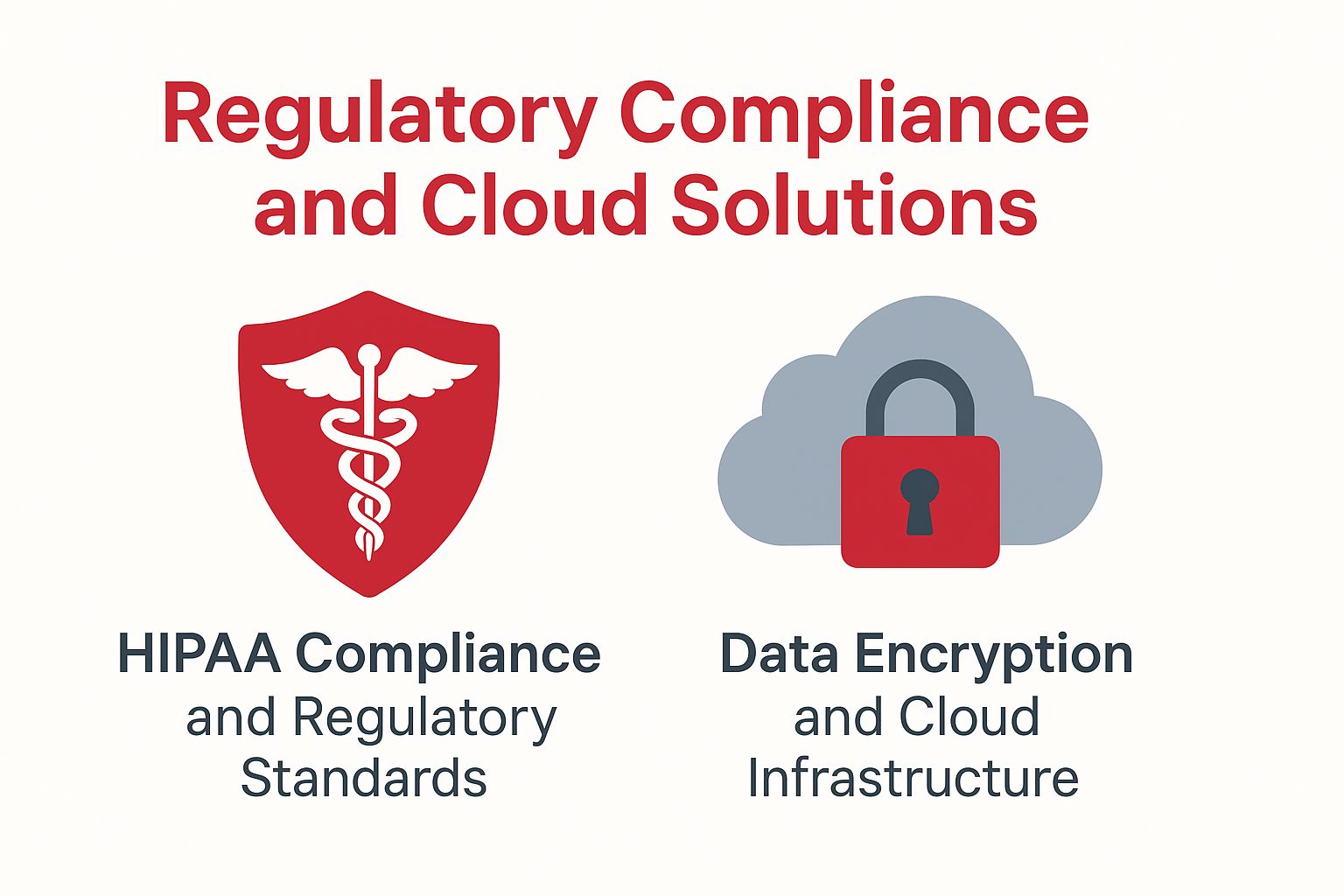
HIPAA Compliance and Regulatory Standards
Cloud-based billing systems follow HIPAA rules to keep patient information safe. They use new technologies like shared architecture and cloud applications to work effectively.
Key features that aid in following HIPAA rules include thorough records and logs that monitor every instance of patient files being viewed or modified, making sure there is accountability and that data can be accessed.
Access logs track who accessed data, when, and what actions they took, providing a clear trail for compliance reviews, and supporting integration capabilities with existing systems.
Encryption methods keep information safe during transmission, stopping unauthorized access, and are essential for keeping systems working together and meeting service agreements.
Solutions like Athenahealth and DrChrono come with these features, increasing security and simplifying billing for providers, which improves patient interaction and happiness.
Regular training on privacy practices further helps teams stay compliant with HIPAA regulations and supports workflow automation with proper software integration.
Data Encryption Standards and Cloud Infrastructure
Using strong data encryption helps protect patient information in online medical billing systems and supports improvements in healthcare technology.
Encryption techniques such as AES (Advanced Encryption Standard) and RSA (Rivest-Shamir-Adleman) are commonly employed in these systems.
For example, AES-256 provides strong security by using a 256-bit key, making it almost impossible to break with current technology.
Using SSL/TLS protocols encrypts data being sent, protecting it from being intercepted, and is essential for maintaining competitive advantage and adherence to industry standards.
Regular checks and following rules like HIPAA (Health Insurance Portability and Accountability Act) help protect patient information when using cloud services, and are important for successful software as a service (SaaS) deployments.
Case Studies: Successful Implementation of Cloud Billing and Revenue Cycle Management
Looking at examples of success can show how cloud billing and patient-centric billing have improved the way healthcare providers operate.
Mayo Clinic – Embracing Cloud Billing for Efficiency
Mayo Clinic implemented Athenahealth’s cloud-based billing system, transforming its revenue cycle management and reducing billing errors by 40%. This shift highlights how adopting modern billing technology improves accuracy and reporting.
Before using Athenahealth, Mayo Clinic struggled with delayed payments and inconsistent billing practices, which caused administrative inefficiencies and strained vendor relationships.
With the new system, Mayo Clinic automated invoicing and streamlined payment tracking, allowing staff to spend more time on patient care instead of manual paperwork.
Additionally, built-in analytics tools provided real-time insights, enabling faster, data-driven decisions. This upgrade not only boosted cash flow but also improved patient satisfaction by minimizing billing errors and accelerating claim approvals.
Cleveland Clinic – Cloud Integration with EHR Systems
Cleveland Clinic saw dramatic improvements in billing accuracy and speed after integrating Cerner’s RevElate platform, which fully supports cloud-based operations and EHR compatibility.
By using Cerner’s advanced billing features, the organization improved claims management and reduced denial rates by 30%. The platform automatically captured charges and integrated seamlessly with their existing Epic EHR, ensuring smooth data exchange between clinical and financial systems.
The addition of real-time analytics dashboards helped identify bottlenecks and monitor revenue cycle KPIs. Cleveland Clinic also leveraged tools like MedAptus for mobile charge capture, giving traveling physicians the ability to submit charges on the go—reducing lost revenue opportunities.
These enhancements shortened billing cycle times by 40% and improved cash flow significantly, proving the ROI of cloud-enabled billing automation.
Upcoming Developments in Cloud Medical Billing Software and Telehealth Connection
The coming changes in cloud medical billing software will focus on new technology, such as artificial intelligence, predictive analytics, and cloud innovation to drive healthcare analytics and business intelligence.
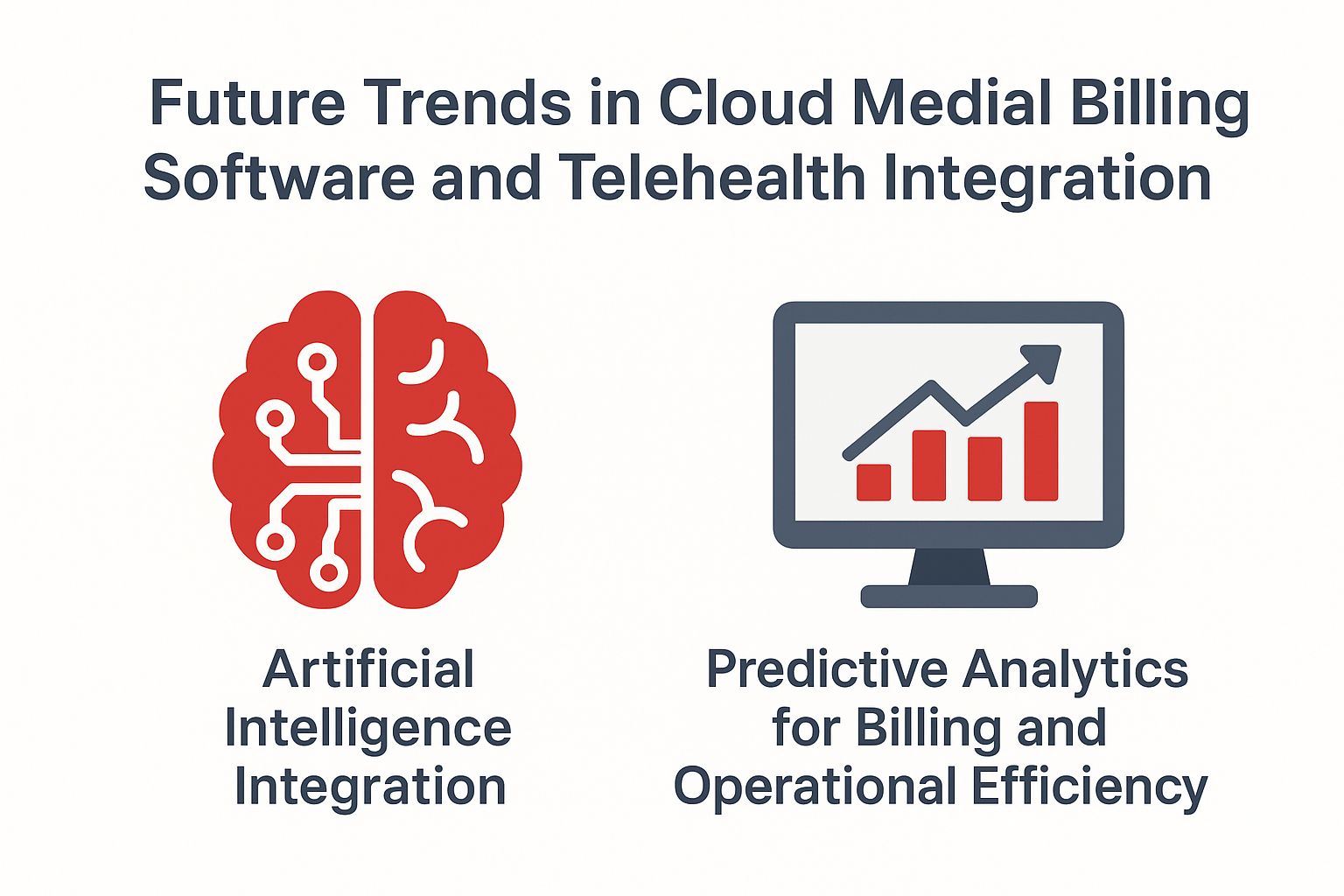
Artificial Intelligence Integration
With artificial intelligence in cloud billing systems, coding and processing claims become easier and more efficient, improving user experience and IT support.
AI makes medical billing better by using tools like A2C (Automated to Collaborative). This technology improves coding accuracy and reduces human errors, leading to better software deployment and system updates.
Claims management platforms like Optum360 use machine learning to forecast claim denials before they are submitted, enabling timely corrections.
These tools can be integrated into existing systems, often resulting in quicker reimbursements and fewer administrative burdens, enabling effective collaboration tools and remote workforce management.
Healthcare providers should evaluate their requirements and select technologies that align with how they operate.
Predictive Analytics for Billing and Operational Efficiency
Predictive analytics improves medical billing by predicting payment patterns and finding billing problems quickly. This supports revenue plans and transitions to cloud platforms.
By utilizing tools like Optum360 or Cerner RevCycle, healthcare providers can analyze historical data to predict which claims are likely to be denied.
For example, Optum360’s Revenue Cycle Analytics offers real-time information, allowing proactive changes that can lower claim denial rates by up to 20%, providing a competitive advantage in billing performance metrics.
Similarly, Cerner RevCycle allows for trend analysis, helping to identify patterns such as high denial rates for certain procedures, leading to targeted training for staff.
Using these solutions can greatly improve handling of revenue processes and make sure payments are received on time.
About the Author
I’m Amanda Anderson, a Stanford University graduate with a Bachelor of Corporate Communications and the owner of a successful medical billing company in Connecticut. With 12 years of experience in revenue cycle management and billing compliance, I help providers get paid faster and more efficiently through modern billing strategies and smarter technology. As a writer and editor for Medical Billing Service Review, I share insights to help healthcare professionals navigate billing with confidence.

Author: Mike Cynar
Mike Cynar brings buyers and sellers together by producing reviews and creating non biased webpages allowing users to share their experiences on various products and services. He and his staff write informative articles related to the medical field, legal, and other small business industries.